
 By
By If you are considering selling your holiday home, one of the first questions you are likely to ask is: how much is my static caravan worth?
There is no single formula for calculating the value of a static caravan. Age is important, but it is only one part of the picture. The manufacturer, model, condition, size, location, park rules and current market demand can all influence what a buyer may be willing to pay.
Understanding these factors can help you set realistic expectations before selling.
In this guide, we explain how static caravan valuations work, what can increase or reduce resale value and what information you should provide when requesting a professional valuation.
How Much Is My Static Caravan Worth?
The value of your static caravan depends on its individual specification, condition and circumstances. Two caravans manufactured in the same year may have very different values because one is a more desirable model, has been better maintained or is located somewhere easier to access and collect.
When valuing a static caravan, buyers typically consider:
- Make and model
- Year of manufacture
- Size and layout
- Number of bedrooms
- Overall condition
- Signs of damp or damage
- Interior specification
- Holiday park and location
- Accessibility for removal
- Current demand for the model
Therefore, the most reliable way to answer “what is my static caravan worth?” is to obtain a current valuation based on your specific caravan rather than relying on generic online estimates.
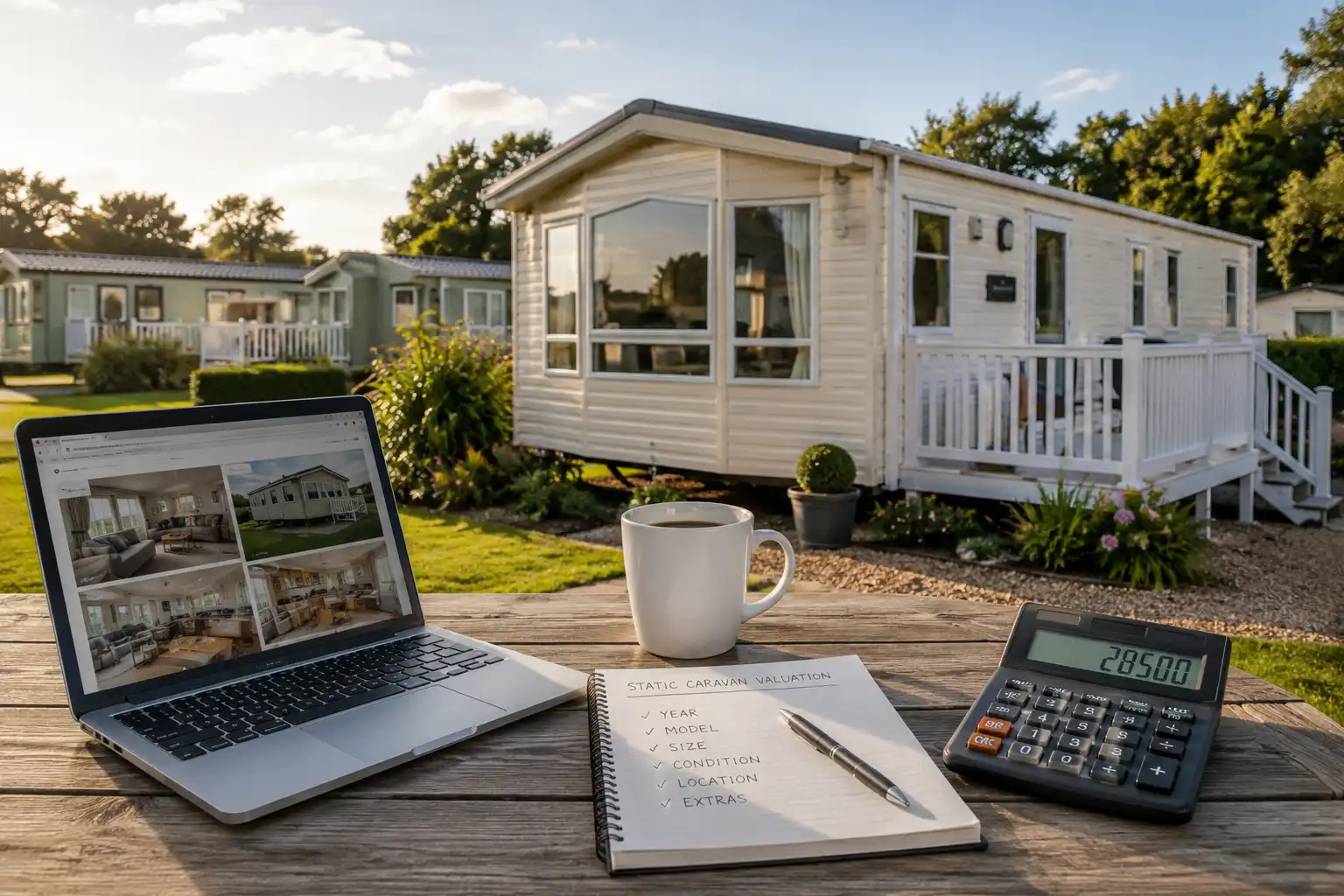
How Is a Static Caravan Valued?
A professional static caravan valuation considers several factors together rather than looking only at age.
An experienced buyer will usually ask for basic information about the caravan and may request photographs showing its current condition.
The valuation can then take account of the caravan’s likely resale potential, transportation requirements and current market demand.
Providing accurate information from the beginning is important. If significant damage or other issues are discovered later, an initial estimate may need to change.
1. Age of the Static Caravan
Age is one of the biggest factors affecting static caravan value.
Like many vehicles and leisure products, static caravans generally depreciate over time. A newer caravan will therefore usually be worth more than a comparable older model.
However, age alone does not determine value.
A well-maintained older caravan from a desirable manufacturer may still attract interest, while a newer caravan with substantial damp or structural damage could be worth less than expected.
When requesting a valuation, provide the correct year of manufacture whenever possible.
2. Make and Model
Manufacturer and model can have a significant influence on resale demand.
Certain manufacturers have established strong reputations within the UK holiday home market, and particular models may remain popular because of their layouts, build quality, specifications or availability.
Common UK static caravan manufacturers include:
- ABI
- Atlas
- Carnaby
- Swift
- Willerby
- Victory
The exact model matters too.
Two caravans from the same manufacturer and year can have different resale values because their original specifications, sizes and layouts are different.
Always provide both the manufacturer and model when requesting a static caravan valuation.
3. Size and Layout
Static caravans are available in many different dimensions and configurations.
Size can influence both buyer demand and transportation requirements.
A valuation may consider:
- Caravan length
- Caravan width
- Number of bedrooms
- Number of bathrooms
- Open-plan or separate living areas
- Kitchen configuration
- Storage
- Overall floor plan
A spacious caravan is not automatically more valuable, however. Demand for a particular size and layout also matters.
4. Number of Bedrooms
Bedroom configuration is another consideration.
Two and three-bedroom static caravans are common throughout UK holiday parks, but their desirability can vary depending on the model and intended market.
A three-bedroom caravan may suit larger families, while a high-quality two-bedroom model could offer larger rooms or additional living space.
For this reason, bedroom numbers should be considered alongside the overall model and specification rather than as an isolated valuation factor.
5. Overall Condition
Conditions can make a substantial difference to how much a static caravan is worth.
A buyer will want to understand how the caravan has been maintained and whether significant work may be required.
Important areas can include:
Exterior Condition
The exterior may be assessed for:
- Damaged cladding
- Roof problems
- Window condition
- Door condition
- Damaged seals
- Corrosion
- Guttering problems
- Visible structural issues
Minor cosmetic wear is expected on an older caravan, but significant damage can affect its value.
Interior Condition
Inside, buyers may consider:
- Flooring
- Walls and ceilings
- Furniture
- Kitchen units
- Appliances
- Bathroom fixtures
- Bedrooms
- Windows
- General cleanliness and maintenance
A clean and well-maintained caravan is easier to assess and may be more attractive than one requiring extensive work.
6. Damp and Water Damage
Damp is particularly important when assessing an older static caravan.
Potential warning signs include:
- Musty smells
- Mould
- Water staining
- Discolouration
- Soft wall or floor areas
- Peeling surfaces
- Persistent condensation
The presence of damp does not necessarily mean that you cannot sell your static caravan. However, its extent and the repairs required can affect its value.
Be transparent about known problems when requesting a valuation.
7. Interior Specification and Features
Specification can also influence desirability.
Depending on the age and model, useful features may include:
- Double glazing
- Central heating
- Integrated appliances
- En-suite facilities
- Freestanding furniture
- Modern kitchen
- Additional storage
- High-quality fixtures
However, owners should be cautious about assuming that the amount spent on upgrades will automatically be added to the caravan’s resale value.
Market demand remains important.
8. Location of the Static Caravan
Your caravan’s current location can influence the valuation, particularly when it needs to be removed.
A buyer may need to consider the logistics of collecting and transporting it.
Factors can include:
- Distance
- Holiday park access
- Road access
- Pitch location
- Space for transport vehicles
- Obstacles surrounding the caravan
- Park collection restrictions
Providing the holiday park name or current location when requesting a valuation helps the buyer understand these practical considerations.
9. Holiday Park Rules and Licence Agreements
If your caravan is situated on a holiday park, its licence agreement can influence your selling options.
Parks may have rules covering:
- Private sales
- Resale commission
- Ownership transfers
- Caravan removal
- Age limits
- Pitch agreements
- Notice periods
- Access for collection
It is important to distinguish between the value of the caravan itself and any perceived value associated with its current pitch.
Selling a caravan does not necessarily mean the new owner automatically acquires the right to use the existing pitch.
Check your park agreement before committing to a sale.
10. Remaining Site Licence
Many holiday parks have rules governing how long a static caravan can remain on the park.
If your caravan is approaching the end of its permitted period, you may need to consider selling or removing it.
This does not necessarily mean the caravan has no value.
A professional static caravan buyer may still be interested in purchasing and removing an older caravan depending on its make, model, condition and market demand.
11. Current Market Demand
Static caravan values are also affected by the market.
Demand can change depending on factors such as:
- Manufacturer
- Model
- Age
- Size
- Condition
- Season
- Availability
- Wider demand for used caravans
This is one reason why an old valuation should not be treated as your caravan’s current value.
If you are thinking about selling now, obtain a current static caravan valuation.
Does a Static Caravan Depreciate?
Generally, yes.
Static caravans typically lose value as they age, particularly compared with their original retail purchase price.
However, depreciation is not always predictable.
For example, the amount originally paid may have included costs associated with:
- Holiday park location
- Pitch
- Siting
- Transport
- Connections
- Decking
- Park charges
- Dealer margins
- Additional packages
These elements may not translate directly into the caravan’s resale value.
This is why comparing your current valuation directly with the amount originally paid can sometimes be misleading.
How Much Value Does a Static Caravan Lose Each Year?
There is no reliable percentage that applies to every static caravan.
Depreciation depends on the individual caravan and market conditions.
A newer caravan can experience different depreciation from an older model, while demand for particular manufacturers and specifications can influence resale prices.
Be cautious of online calculators that claim every static caravan loses exactly the same percentage each year.
A valuation based on the actual caravan provides a more useful indication.
Does Decking Increase Static Caravan Value?
Decking can improve the enjoyment and appearance of a holiday home, but it does not necessarily add an equivalent amount to the caravan’s resale value.
If the caravan is being removed from the holiday park, decking may remain on the pitch or require separate removal.
Before selling, establish whether decking is:
- Included in the transaction
- Owned by you
- Required to remain on the pitch
- Being removed separately
Do not assume that expensive decking will automatically increase a professional buyer’s offer by the amount you originally paid for it.
Do Improvements Increase the Value of a Static Caravan?
Some improvements can make a caravan more attractive, but the cost of an upgrade does not necessarily equal the increase in resale value.
Examples include:
- New carpets
- Replacement furniture
- New appliances
- Updated curtains
- Exterior improvements
- New mattresses
- Cosmetic decoration
If you are planning expensive improvements purely because you want to sell, consider obtaining a valuation first.
You may discover that selling the caravan in its current condition makes more financial sense.
Should I Repair My Static Caravan Before Selling It?
Minor maintenance can be worthwhile, particularly when it improves presentation at little cost.
For example:
- Cleaning thoroughly
- Removing personal belongings
- Replacing inexpensive damaged items
- Tidying exterior areas
- Addressing simple maintenance issues
More expensive repairs require careful consideration.
If substantial work is required, obtain a valuation before spending money. The cost of repairs may be greater than the increase in resale value they generate.
Can I Sell an Old Static Caravan?
Yes. An older static caravan may still have value.
Professional buyers assess caravans individually, taking into account:
- Age
- Make
- Model
- Condition
- Dimensions
- Location
- Accessibility
- Current market demand
If your caravan is approaching the end of its holiday park licence, do not automatically assume it is worthless.
Request a valuation first.
Can I Sell a Static Caravan With Damp or Damage?
Potentially, yes.
Caravans requiring work can still have value, although damage is likely to affect the amount offered.
The most important thing is to provide accurate information.
If there is known damp, structural damage, broken windows or other significant issues, mention them and provide photographs where possible.
This allows a buyer to assess the caravan realistically from the beginning.
How Can I Increase My Static Caravan's Resale Value?
There are several practical steps you can take before requesting a valuation.
Give It a Thorough Clean
A clean caravan allows its true condition to be assessed more easily.
Remove Clutter
Removing personal possessions makes rooms easier to photograph and inspect.
Complete Minor Maintenance
Small, inexpensive repairs may improve overall presentation.
Gather Documentation
Locate relevant information about the make, model, age, specification and park agreement.
Take Clear Photographs
Good photographs help a buyer assess the caravan accurately.
Take pictures of:
- Front exterior
- Rear exterior
- Both sides
- Lounge
- Kitchen
- Bedrooms
- Bathroom
- Any damaged areas
Avoid hiding defects. Transparency helps create a smoother valuation and selling process.
What Information Do I Need for a Static Caravan Valuation?
Before requesting a valuation, gather as much accurate information as possible.
Ideally, provide:
- Manufacturer
- Model
- Year
- Length and width
- Number of bedrooms
- Current holiday park or location
- Overall condition
- Details of damage or damp
- Interior specification
- Clear photographs
The more accurate the information, the easier it is for a buyer to assess your caravan.
Online Static Caravan Valuation vs Professional Valuation
Generic online valuation tools can sometimes provide a broad indication, but they cannot always account for the specific condition, location or accessibility of your caravan.
A professional valuation can consider the actual caravan and current market circumstances.
This is particularly important if your caravan is:
- Older
- Damaged
- Approaching the end of its site licence
- Located on a holiday park
- Being sold for removal
If you are seriously considering selling, obtaining a direct valuation can provide a more useful starting point.
Should I Sell Privately or to a Static Caravan Buyer?
Once you know what your caravan may be worth, you need to decide how you want to sell it.
Selling Privately
A private sale gives you control over the asking price, but you may need to manage:
- Advertising
- Photography
- Enquiries
- Viewings
- Negotiations
- Park requirements
- Payment
- Ownership transfer
You also need to check whether your holiday park allows private sales.
Selling to a Professional Buyer
Selling directly to a static caravan buyer can be more convenient if your priority is a straightforward transaction.
You do not need to spend time advertising or dealing with numerous prospective buyers.
For a complete explanation of your selling options, read our Complete Guide to Selling a Static Caravan in the UK.
How to Get a Static Caravan Valuation From HD Caravans
HD Caravans has more than 35 years of experience in the static caravan industry and buys static caravans across the UK.
The valuation process is designed to be straightforward.
Step 1: Provide Your Caravan Details
Tell HD Caravans about your caravan, including its make, model, age, location and condition.
Step 2: Provide Photographs
Clear photographs help the team understand the caravan’s current condition.
Step 3: Receive Your Valuation
HD Caravans offers free static caravan valuations and aims to provide an offer within 12 hours once the required information has been received.
Step 4: Decide Whether to Sell
There is no need to spend time creating advertisements or arranging multiple private viewings if you decide to proceed with a direct sale.
Step 5: Payment and Collection
Once the sale is agreed, HD Caravans can arrange instant payment and free collection, subject to the circumstances of the caravan and site.
Frequently Asked Questions About Selling a Static Caravan
Find Out What Your Static Caravan Is Worth
If you have been asking “how much is my static caravan worth?”, you do not need to rely on guesswork or outdated online estimates.
Every caravan is different, and its value can be influenced by everything from age and model to condition, location and current demand.
HD Caravans offers free static caravan valuations, with offers available within 12 hours once the necessary information has been provided.
With over 35 years of industry experience, instant payment and free collection available, HD Caravans provides a straightforward way to value and sell your static caravan.
Request your free static caravan valuation today and find out what your caravan could be worth.
Tags
Static CaravanRecent Posts
Categories

Quick Links
Copyright ©2025. All Rights Reserved. Hugh Daly Caravans | Privacy Policy | Cookie Policy | Sitemap | Areas We Cover